How we got to FLUX.2.
Twelve years of ideas that taught machines to paint, from the variational autoencoder to today’s frontier image model. Every stop links to a plain-English explanation or a live interactive graph.
Two ideas make images something a network can produce, not just recognize.
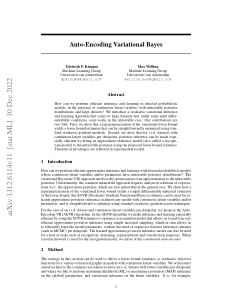
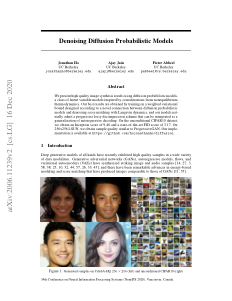
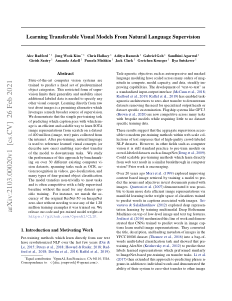
Transformers learn to see, text and images share a space, and the recipe goes open source.
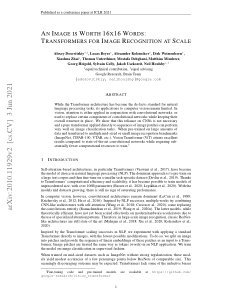

The U-Net gives way to patches and blocks, and scaling laws arrive for images.
Rectified flow plus a big DiT becomes the frontier recipe for pictures.
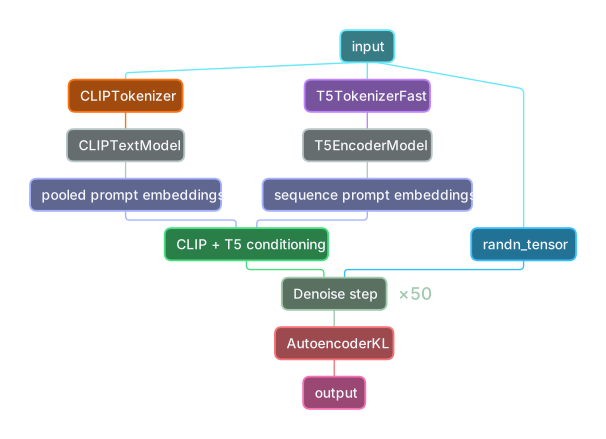
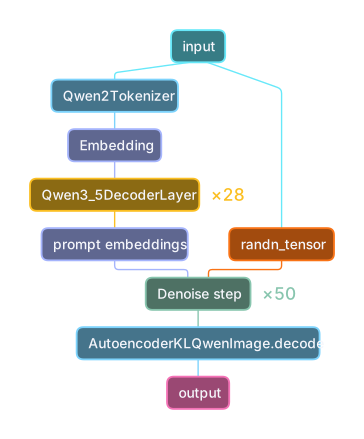
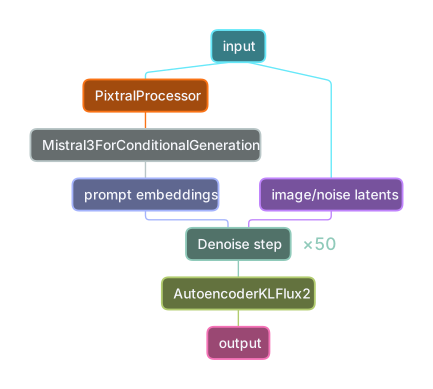
black-forest-labs/FLUX.2-dev
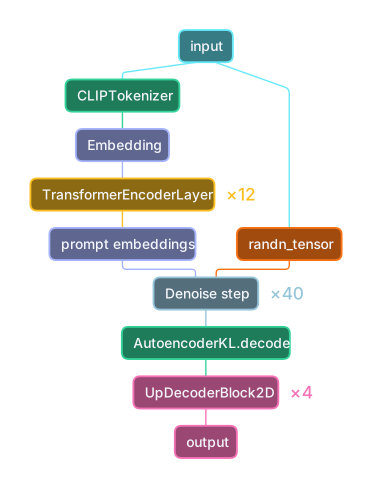
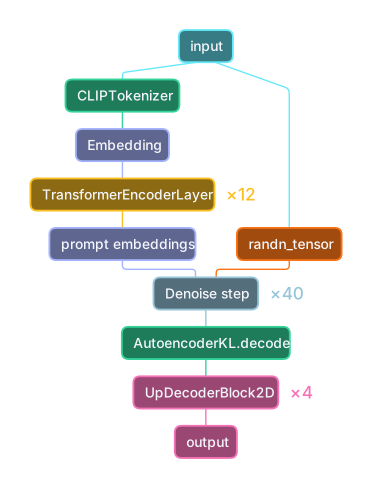
Every idea above, alive in one graph: a VAE latent, a denoising loop, DiT blocks with the LLM stack’s own RMSNorm inside. Open it and trace a prompt’s path to pixels.
Want the definitions behind each stop? The glossary explains all 40 concepts, and the catalog has interactive graphs for 6,800+ models.