RVQ codebooks
Quantizes audio into discrete tokens through several rounds of vector lookup, each round encoding the previous round’s error.
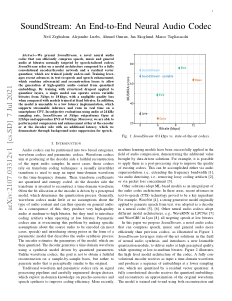 Popularized inJul 2021SoundStream: An End-to-End Neural Audio Codec
Residual vector quantization turns continuous audio features into discrete tokens a language model can predict: the first codebook approximates the vector, the second encodes the leftover error, and so on. More codebooks mean higher fidelity at more tokens per second. Neural audio codecs and most modern TTS/music models are built on this.
Adoption over time
Share of new models that have included RVQ codebooks over time.
See it in real models
Open any of these on hfviewer to find this block in the interactive architecture graph.
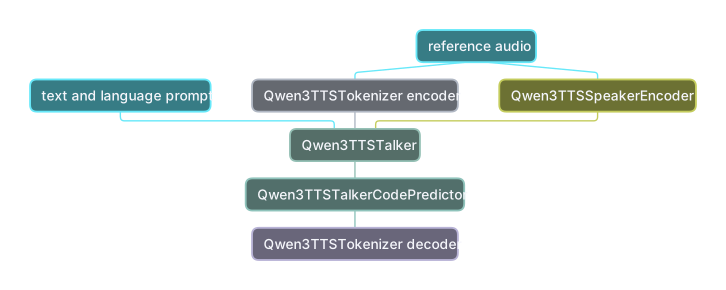
 Qwen/Qwen3-TTS-12Hz-1.7B-Base↓ 3.8M · ♡ 525Open in visualizer
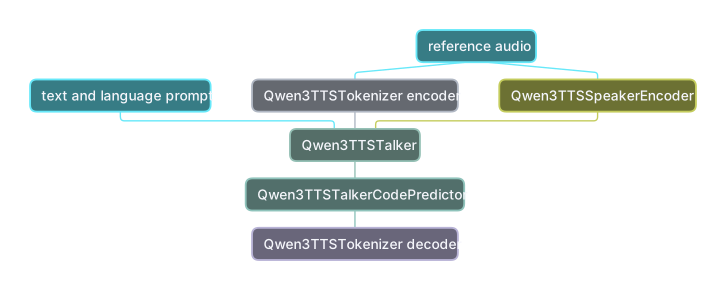 Qwen/Qwen3-TTS-12Hz-1.7B-CustomVoicetext-to-speech · ↓ 2.6M · ♡ 2kOpen in visualizer
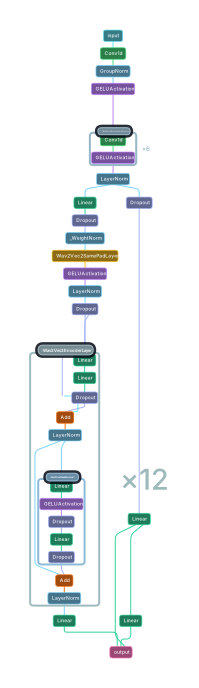
 facebook/wav2vec2-base↓ 2.5M · ♡ 127Open in visualizer
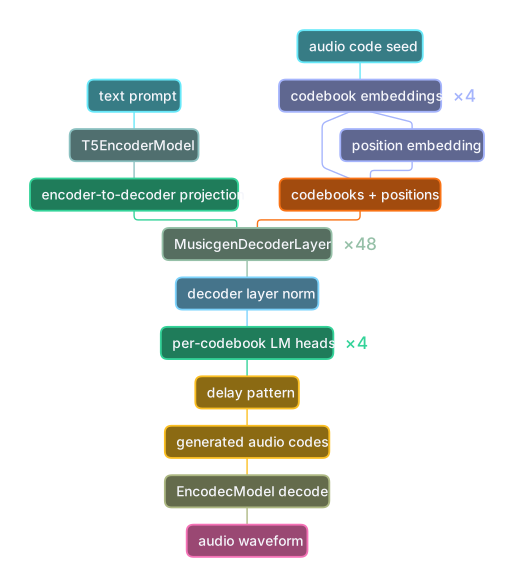 facebook/musicgen-mediumtext-to-audio · ↓ 1.9M · ♡ 169Open in visualizer
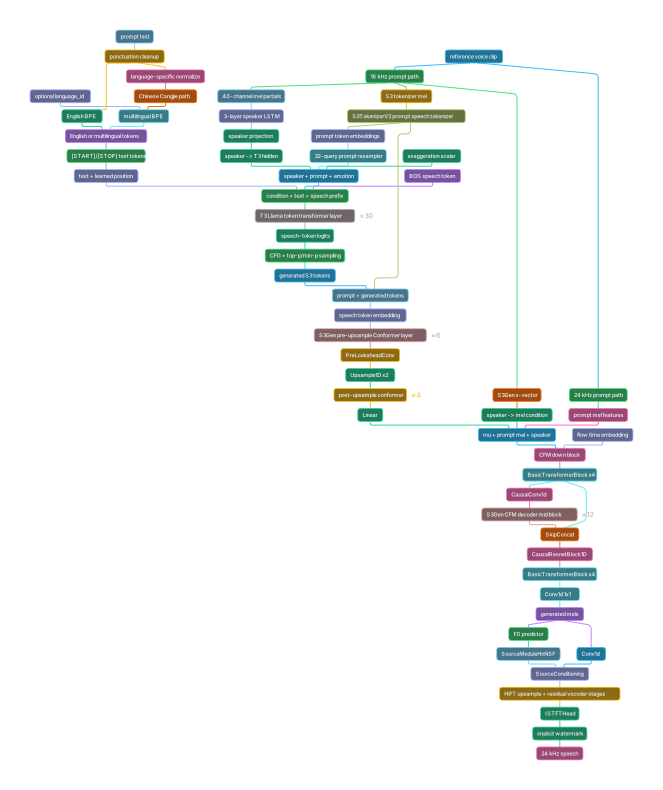
 ResembleAI/chatterboxtext-to-speech · ↓ 1.8M · ♡ 2kOpen in visualizer
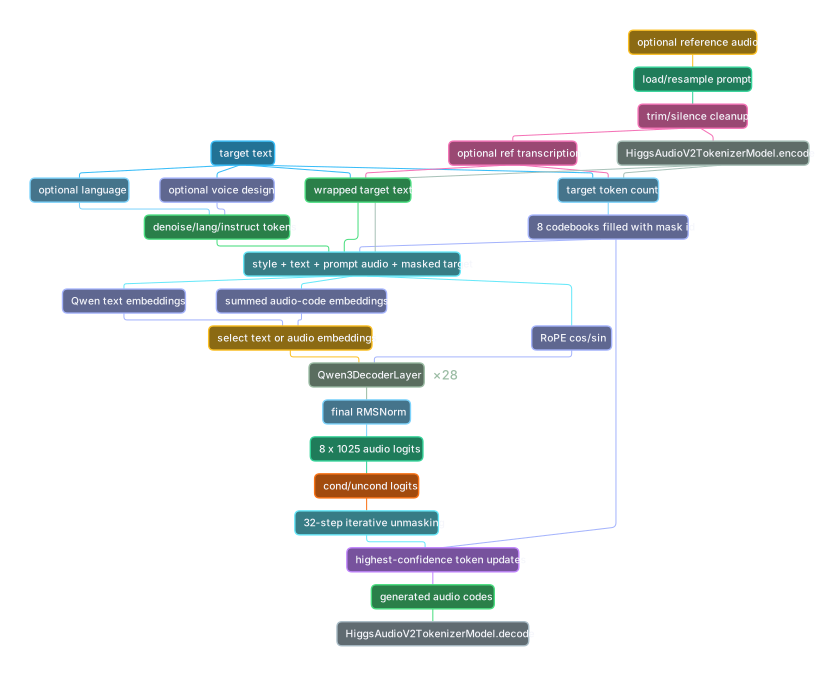
 k2-fsa/OmniVoicetext-to-speech · ↓ 1.3M · ♡ 1kOpen in visualizer
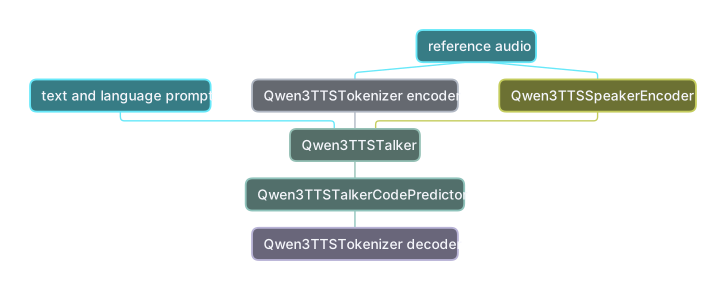 Qwen/Qwen3-TTS-12Hz-0.6B-CustomVoicetext-to-speech · ↓ 1.0M · ♡ 190Open in visualizer
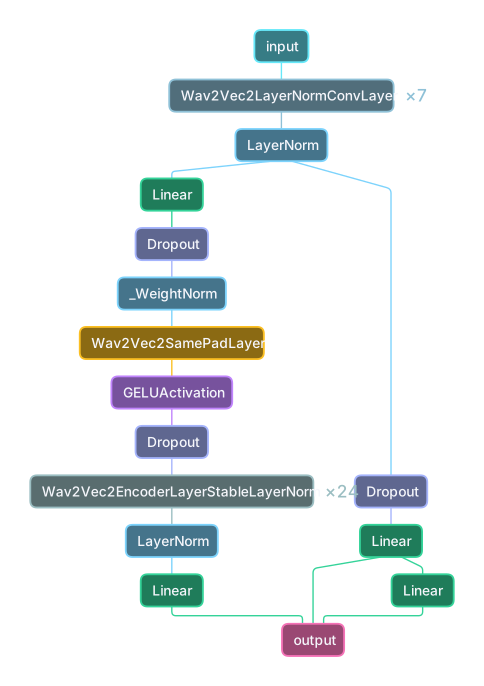 facebook/wav2vec2-xls-r-300m↓ 735k · ♡ 138Open in visualizer
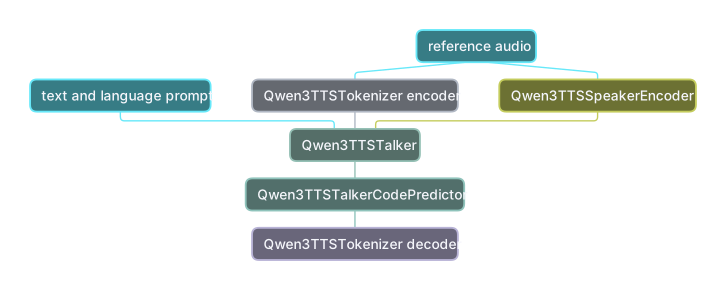 Qwen/Qwen3-TTS-12Hz-0.6B-Basetext-to-speech · ↓ 655k · ♡ 299Open in visualizer
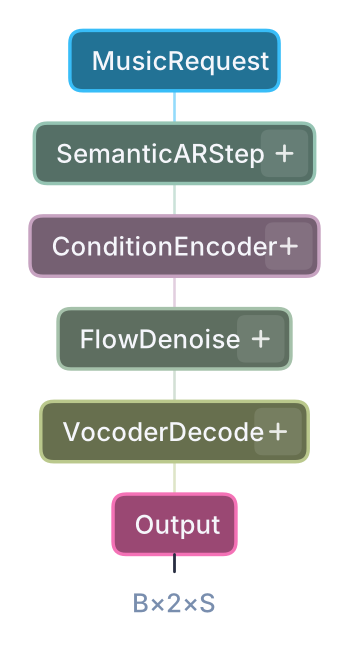
 Comfy-Org/MiniMax-Music-3↓ 468k · ♡ 235Open in visualizer

 audio-cpp/MiniMax-Music3-GGUFtext-to-audio · ↓ 457k · ♡ 26Open in visualizer
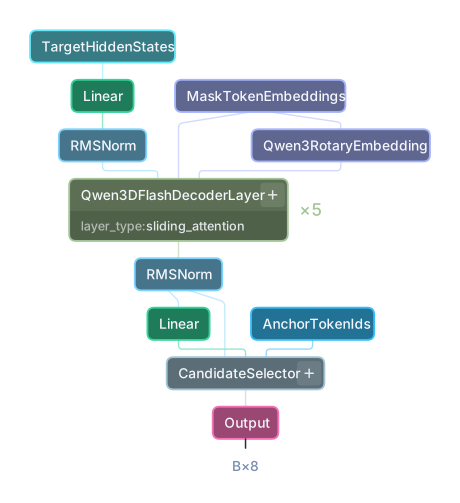
 incoai/Qwen3.8-27B-DFlash2text-generation · ↓ 391k · ♡ 247Open in visualizer
View 100 catalog matches for RVQ codebooks →
Related concepts
hfviewer renders the full architecture of 6,700+ Hugging Face models as interactive graphs. Hover any block to see what it does, with this model’s real numbers.
Browse all model graphs →